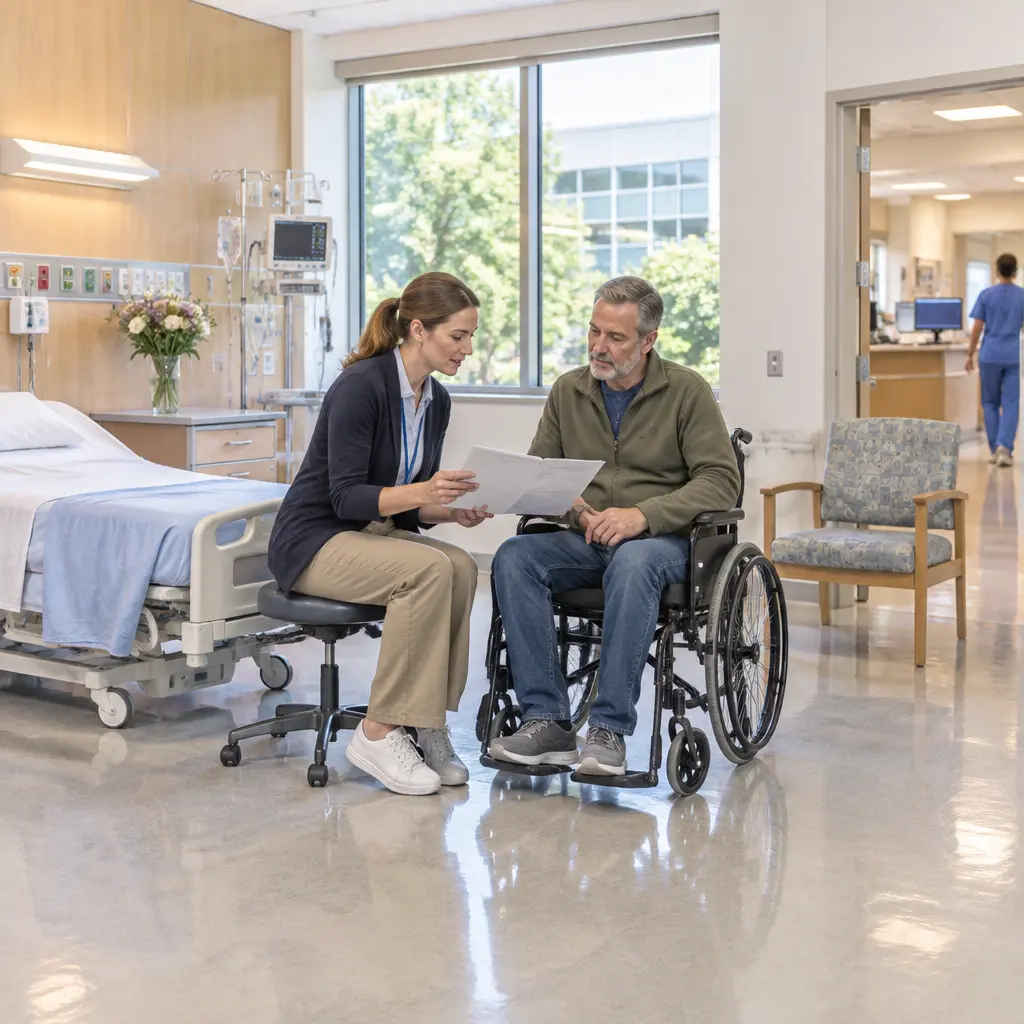
A care needs assessment is a structured evaluation of a person’s abilities, health, risks, and support requirements. A funding evidence log turns that evaluation into dated, specific, verifiable records that help show whether a person meets a program’s eligibility rules and what services are needed. Good logs connect documented needs to functional effects, frequency, risks, and requested supports—not simply to diagnoses. This matters because eligibility and coverage depend on the rules of the relevant program, while incomplete or vague records can make a genuine need harder to substantiate. The sections below explain assessment evidence, practical log categories, documentation quality, and how to prepare a claim without overstating what the evidence shows.
Care Needs Assessment Evidence Logs: Definition and Funding Eligibility
There is no single universal definition of a “care needs assessment evidence log.” In practical terms, it is a chronological record of observations, incidents, assistance provided, outcomes, and supporting documents, organized to demonstrate needs against a funder’s stated criteria. The assessment describes the person’s circumstances; the log helps show how those circumstances affect daily life over time.
Eligibility criteria differ among public programs, insurers, local authorities, and private funding schemes. For example, U.S. Medicaid long-term services and supports are administered under federal and state rules, and state programs may use different functional or financial requirements. In England, NHS Continuing Healthcare eligibility is assessed under the National Framework using a multidisciplinary process and a decision-support tool. These are distinct systems, so evidence should be organized around the exact rules that apply rather than treated as interchangeable.
The World Health Organization’s International Classification of Functioning, Disability and Health provides a framework for understanding functioning in relation to health conditions, activities, participation, and environmental factors. That perspective is useful for evidence logs: a diagnosis alone may not show whether a person can bathe safely, prepare food, communicate a need, or manage medication without help.
Assessment evidence and eligibility evidence
Assessment evidence describes what the person can and cannot do, what support is required, and what happens when support is absent or delayed. Eligibility evidence links those facts to a particular program’s criteria. A strong record makes both steps visible: for example, it records repeated assistance with transfers and then identifies the applicable criterion concerning mobility or personal care, if that criterion exists in the program’s rules.
Why dated records matter
A single appointment offers a snapshot, while care needs can fluctuate by time of day, health status, environment, and task. A dated log can reveal frequency and variation, distinguish routine support from exceptional events, and help reviewers understand whether a need is continuing. The U.S. Centers for Medicare & Medicaid Services describes person-centered planning in Medicaid home- and community-based services as an individualized process that reflects the person’s needs, preferences, and goals; contemporaneous records can help make those circumstances concrete.
Care Needs Assessment Logs Record Functional Support Requirements
A functional support log records the help required to complete activities, rather than relying only on broad labels such as “dependent” or “needs supervision.” Useful entries identify the task, the level and duration of assistance, the person’s response, and any relevant risk or outcome. This makes the record more usable for assessment, care planning, and review.
Activities of daily living
Activities of daily living commonly include bathing, dressing, toileting, eating, and moving between positions. For each activity, record what the person does independently, what prompts or physical help are needed, and whether adaptive equipment or another person’s presence is required. For example, “needed hands-on help to step into the shower because of unsteadiness” is more informative than “bathing difficult.”
Instrumental activities and community living
Instrumental activities of daily living include tasks such as preparing meals, shopping, managing household tasks, arranging transportation, and handling medication routines. These activities can show how a person’s needs affect safe and sustained living at home or participation in the community. Record the specific task, barriers, support provided, and practical consequences—for instance, whether meals were missed or appointments could not be attended without assistance.
Supervision, prompting, and communication support
Care needs are not limited to hands-on physical assistance. Some people need reminders, monitoring, interpretation, communication aids, or supervision to complete tasks safely. Logs should distinguish a prompt from continuous supervision and describe why it was needed. Where relevant, note how the person communicates choices and how staff or family members support understanding, while respecting privacy and the person’s preferences.
Care Needs Assessment Logs Document Risk, Frequency, and Variation
Functional descriptions show what support is needed; risk and pattern records explain when it is needed and what may happen without it. Together, these details help prevent an assessment from understating needs that are intermittent, time-sensitive, or difficult to observe during a brief visit.
Incidents, near misses, and unmet needs
An incident entry should state the date and time, what was observed, what happened immediately before and after, actions taken, and any follow-up. Include near misses and occasions when help was unavailable, not only events that caused injury. Avoid speculation: separate direct observations from the person’s report and from a professional’s interpretation. Record relevant safeguarding or clinical escalation through the appropriate channels rather than using a funding log as a substitute for urgent care.
Frequency, duration, and unpredictability
Frequency and duration help translate general need into a support pattern. Note how often assistance is required, how long it takes, whether support is needed overnight, and whether episodes can be anticipated. Where needs vary, log both typical and higher-need days and explain the context, such as illness, fatigue, medication changes, or environmental barriers. A short recording period may not represent a longer-term pattern, so identify the dates covered and any known limitations.
Fluctuating and episodic conditions
For fluctuating conditions, document variation rather than averaging it away. Record periods of relative stability alongside episodes of increased need, including triggers when known, recovery time, and support required during and after an episode. The National Institute for Health and Care Excellence advises that care and support needs should be considered in the context of the individual and their circumstances; an evidence log can help show how a condition affects function in everyday settings.
Care Needs Assessment Logs Connect Records to Professional Evidence
A log is most persuasive when it is consistent with relevant clinical and social-care records. Supporting material may include assessment reports, care plans, medication records, discharge summaries, therapy recommendations, risk assessments, and statements from people who provide or observe care. The goal is not to accumulate paperwork indiscriminately, but to corroborate the person’s actual support needs and clarify any apparent differences between sources.
First-hand observations and source attribution
Each entry should identify who recorded it and whether the information is a direct observation, the person’s account, or information reported by someone else. Use neutral, specific language and retain the original record where possible. If a family member records an event, state their relationship and whether they witnessed it; if a clinician provides an opinion, identify the document and date rather than presenting the opinion as a personal observation.
Consistency across records
Compare the log with current care plans and professional reports before submission. If records differ—for example, one describes independent transfers while another records hands-on assistance—explain the dates, settings, equipment, or changes in condition that may account for the difference. Do not alter older entries to create a false appearance of consistency; add a dated clarification or correction that preserves the audit trail.
Privacy, consent, and secure handling
Care records may contain sensitive personal and health information. Collect only what is relevant, explain the purpose of the record, obtain consent where required, and follow applicable privacy and retention rules. Share documents through the funder’s approved process and keep a secure copy of what was submitted. In the United States, HIPAA applies to covered entities and business associates in specified circumstances; it does not automatically govern every family or informal caregiver record.
Care Needs Assessment Evidence Logs Support Clear Funding Submissions
A funding submission should make it easy for a reviewer to follow the path from documented facts to the requested support. Organize evidence by the funder’s criteria, use a concise summary, and point to dated examples rather than asking the reviewer to infer the pattern from a large, unsorted file.
A practical evidence-log format
A simple table can include these fields: date and time; task or need; what was observed or reported; assistance provided; duration and frequency; risk or outcome; recorder and source; and related supporting document. Add a separate column or index reference for the eligibility criterion the evidence may address. This is an organizing aid, not a substitute for the funder’s official forms or assessment requirements.
Linking evidence to criteria without overclaiming
For each relevant criterion, summarize the supporting facts and cite the log dates or documents that substantiate them. Use measured language such as “the entries document assistance on these dates” rather than asserting that a person is eligible unless the responsible authority has made that decision. Eligibility determinations belong to the relevant program or decision-maker.
Review, submission, and appeal readiness
Before submitting, check dates, names, legibility, missing periods, duplicate entries, and whether every statement is supported. Keep a copy and note the submission date. If a decision is negative or the award does not reflect documented needs, review the decision letter and the program’s deadlines and appeal process; consider asking the assessor to identify which criteria were not met and what evidence was considered.
Care Needs Assessment Evidence Logs Improve Person-Centered Decisions
Effective logs combine clear functional descriptions, dated examples, risk and variation records, and corroborating documents. They distinguish observed facts from opinions, protect personal information, and map evidence to the applicable funding rules. Because programs use different definitions and procedures, applicants and caregivers should obtain the current criteria and official forms from the responsible agency or insurer before building a submission.
A practical next step is to begin a consistent, factual record, review it with the person receiving care and relevant professionals, and organize the evidence around the questions the funder actually asks. A well-prepared log cannot guarantee funding, but it can make needs easier to understand and support fairer, better-informed assessment.
Sources: World Health Organization, International Classification of Functioning, Disability and Health (ICF), https://www.who.int/standards/classifications/international-classification-of-functioning-disability-and-health; Centers for Medicare & Medicaid Services, Medicaid Home & Community-Based Services, https://www.medicaid.gov/medicaid/home-community-based-services/index.html; National Health Service England, National Framework for NHS Continuing Healthcare and NHS-funded Nursing Care, https://www.gov.uk/government/publications/national-framework-for-nhs-continuing-healthcare-and-nhs-funded-nursing-care; National Institute for Health and Care Excellence, Care and Support of People Growing Older with Learning Disabilities, https://www.nice.org.uk/guidance/ng96; U.S. Department of Health and Human Services, Health Information Privacy, https://www.hhs.gov/hipaa/for-individuals/index.html.